Okinawa’s beaches get all the postcards, but the islands’ real soul shows up in its festivals — centuries-old rituals tied to the sea, the harvest, and the ancestors, still carried out block by block, village by village, exactly as they have been for generations. Many of these follow the old lunar calendar, so exact dates shift a little every year, but here’s a season-by-season guide to the traditional events worth timing a visit around.
January — New Year in the Ryukyu Kingdom
Shuri Castle New Year’s Ceremony
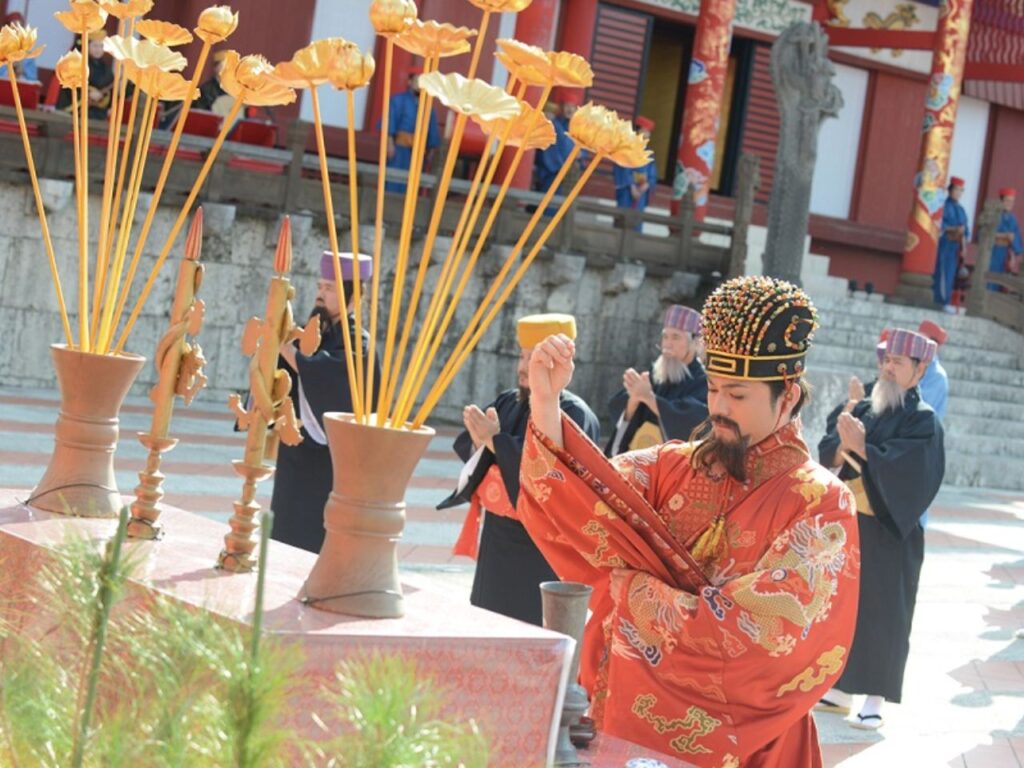
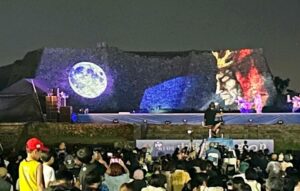
Every January, Shuri Castle recreates Chōhai Ugushiki, the formal New Year’s ceremony once performed by the Ryukyu king and his court. In the castle’s inner courtyard (unaa), performers in period dress reenact the king and his officials facing one another in full ceremonial costume, accompanied by classical court music and dance — a genuinely striking scene that feels like stepping back a few centuries. The surrounding Shuri district makes a good afternoon of it too, with the royal mausoleum Tamaudun and a cluster of Ryukyuan craft shops and cafés nearby.
📅 When: Annually, January 1–3
📍 Where: Shuri Castle Park, main courtyard in front of the main hall — 1-2 Shurikinjo-cho, Naha
🔗 Official site: https://oki-park.jp/shurijo/
Late April – Early May — Golden Week on the Water
Naha Haaree
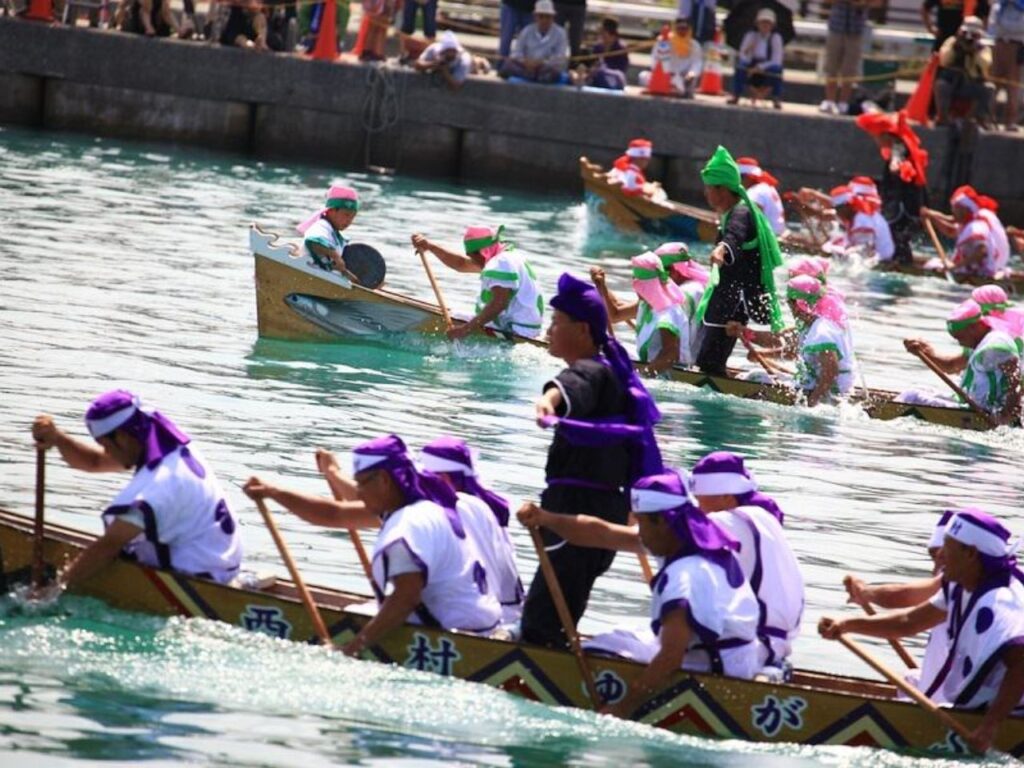
Haaree is Okinawa’s traditional dragon-boat racing festival, rowed on the old lunar calendar’s 5th month, 4th day, though Naha’s version is timed to Golden Week. Crews race hand-paddled hariusen and sabani fishing boats to the rhythm of drums and rowing chants — a prayer for safe voyages and a good catch as much as a competition. Food stalls and marine activities usually run alongside the races, so it’s as much a beach-day festival as a sporting one. Every fishing community on the islands holds its own version of Haaree at a different time of year, but Naha’s is the largest and most accessible.
📅 When: May 3–5 (Golden Week)
📍 Where: Naha Port, Shinko Pier — 1 Minatomachi, Naha
Late July — A Village Festival by the Beach
Kuroshima Hōnensai
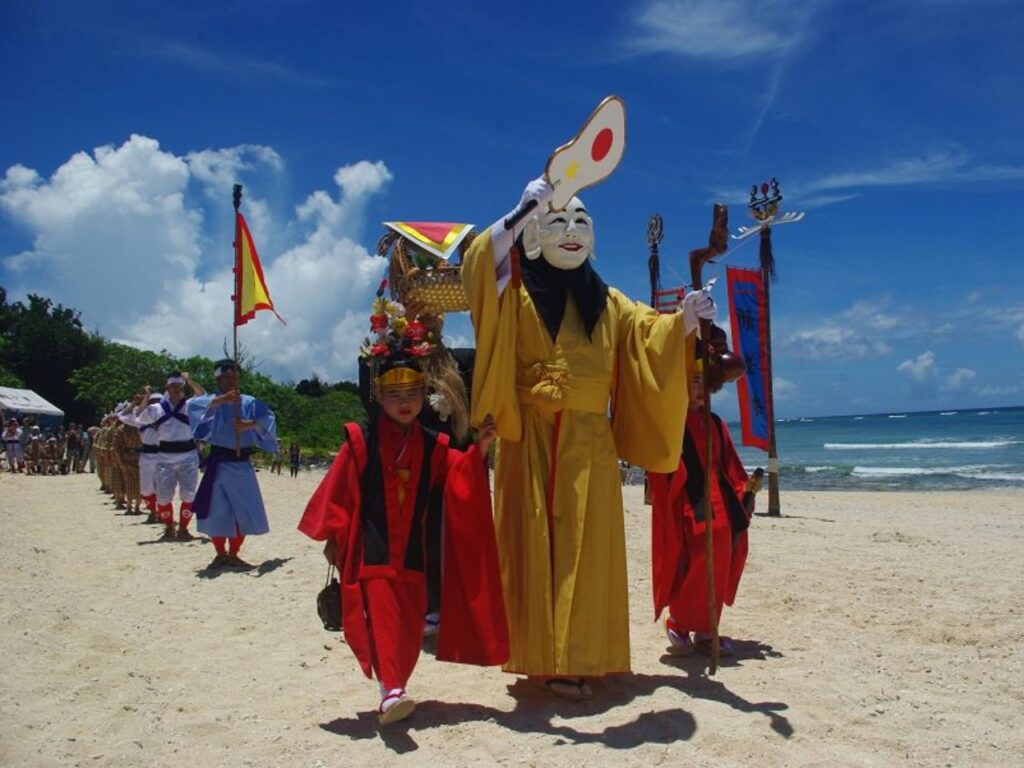
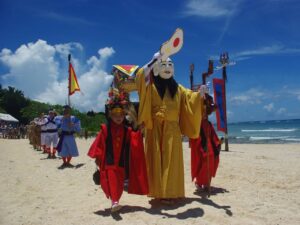
On the small island of Kuroshima, this harvest festival gives thanks for the year’s crops with a beachside program: an Uunii Haaree boat race in which rowers sprint the final stretch on foot across the sand, a procession led by the harvest deity Miruku, and dedication dances performed with sticks and sickles. It’s a small-scale, intensely local event — the whole island turns out, and visitors get an unusually close view of both the ritual and the coastline itself.
📅 When: Usually the last Sunday of July (new calendar); can shift a week either way depending on the tides and lunar timing
📍 Where: Miyazato Beach, Kuroshima, Taketomi Town
August — Peak Season for Lunar-Calendar Festivals
Mid-to-late summer, timed to the Bon season on the lunar calendar, is when the outer islands hold their biggest annual festivals — most fall within a few weeks of each other but on different islands, so a single late-summer trip through the Yaeyama or Miyako islands can catch several.
Angama
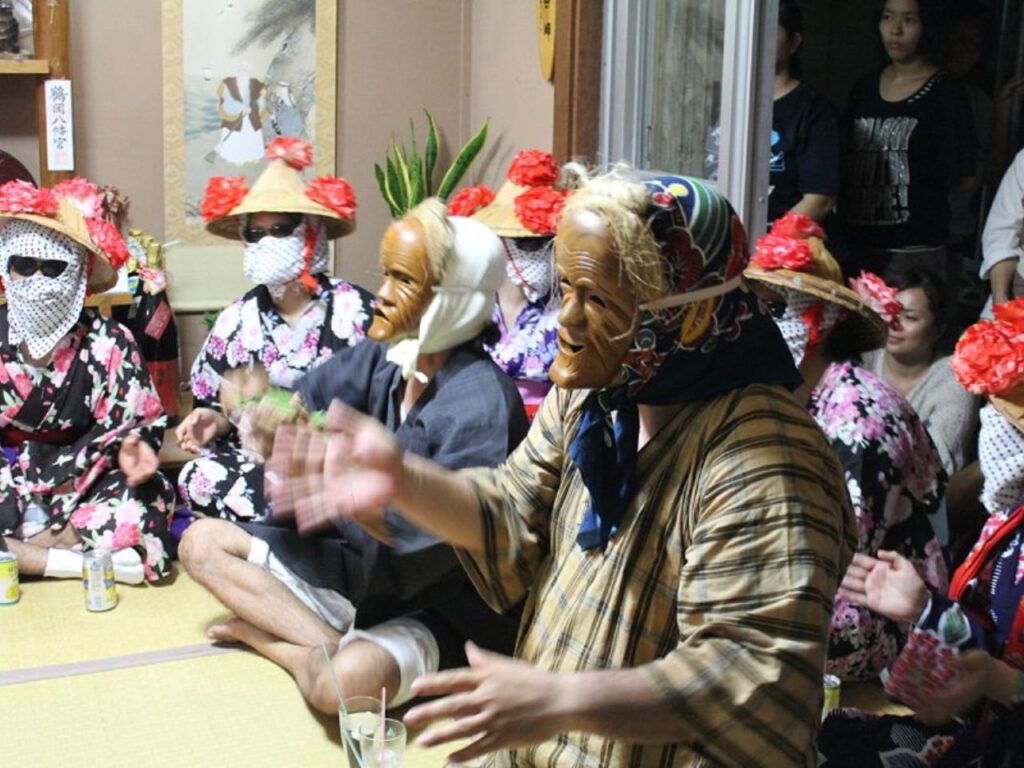
During Bon, elderly-spirit messengers from the afterlife — Ushumai and Nmi — pull on masks and make the rounds of village households on Ishigaki, accompanied by drums and sanshin, and trailed by a group of masked young performers. At each home they pay respects at the family altar before breaking into songs, dances, and a comic back-and-forth with onlookers, conducted entirely in local dialect. It’s playful and a little eerie at once, and one of the more accessible ways to see Yaeyama folk culture up close.
📅 When: Lunar calendar, 7th month, 13th–15th day (the exact schedule is published in the local paper on the first day of Bon)
📍 Where: Villages across Ishigaki City (Tonoshiro, Ishigaki, Arakawa, Hirae, Ohama, Okawa, Oarisato districts)
Mushaama
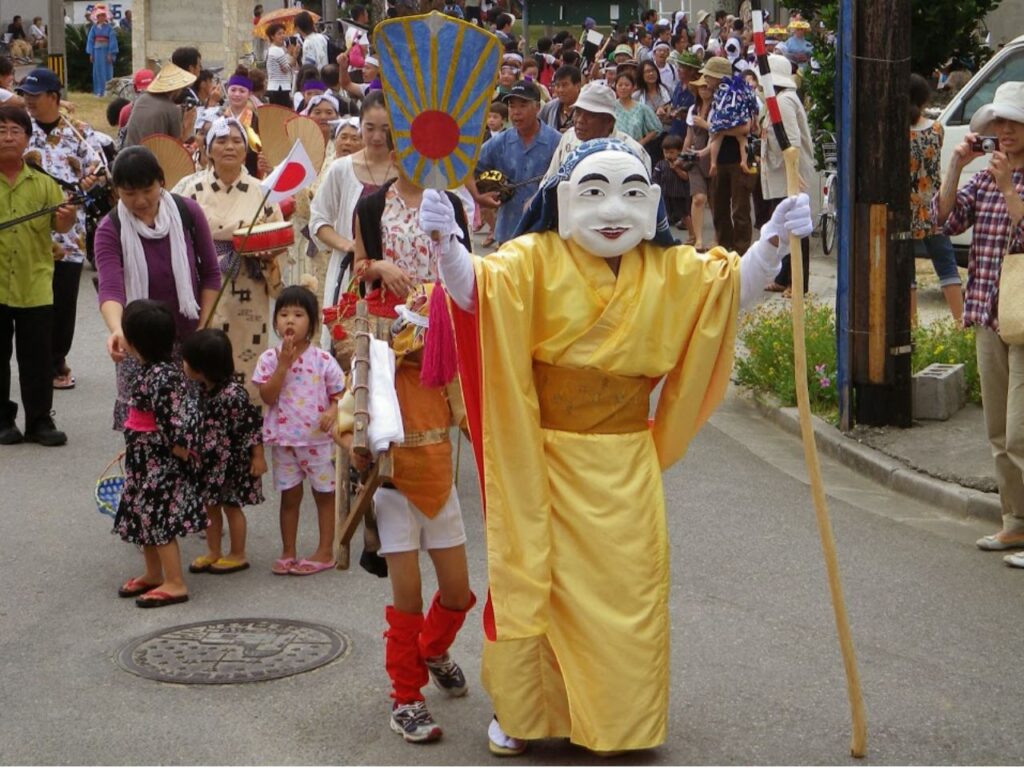
On Japan’s southernmost inhabited island, Mushaama prays for a good harvest, a safe catch, and the peace of ancestors. A costumed procession leads with three Miroku (Maitreya) deities, followed by children, a rain-calling god, and comic figures, and the day rolls on with drumming, stick-fighting displays, ritual chanting, kyogen theater, folk dance and song, closing with a lion dance. It’s the single busiest day of the year on Hateruma — even residents who’ve moved away come home for it.
📅 When: Lunar calendar, 7th month, 14th day
📍 Where: In front of Hateruma Fureai Center, Hateruma, Taketomi Town
Kechigan Festival
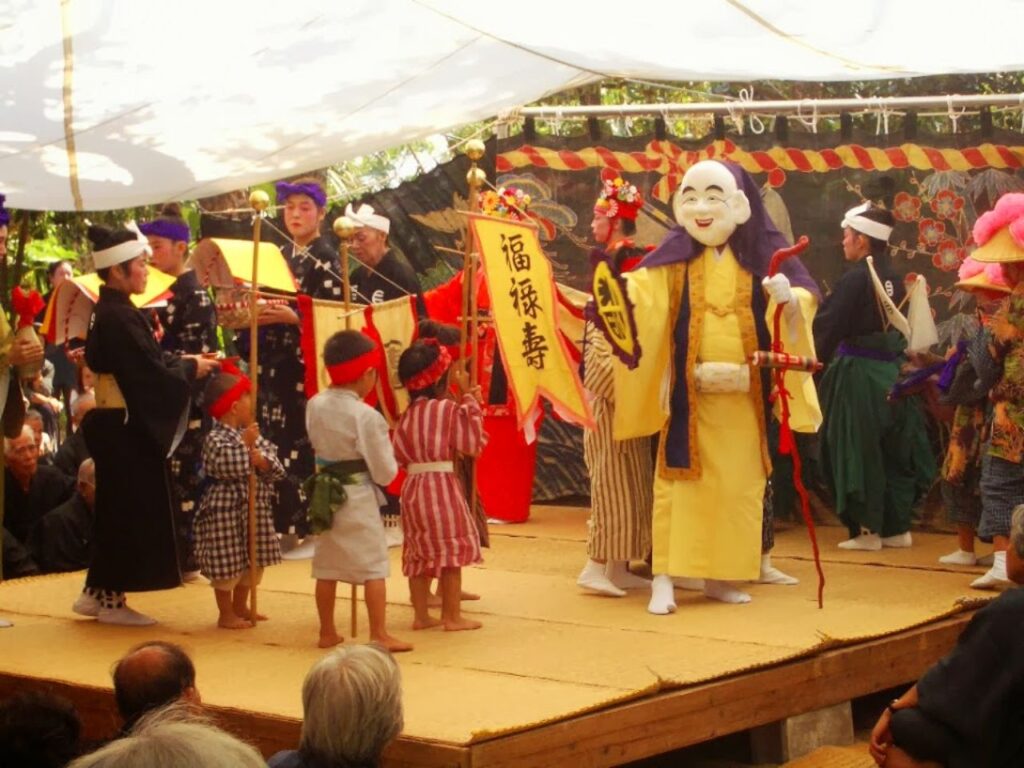
A three-day festival of thanks for the harvest and prayers for the next one, held at the island’s sacred utaki groves. The second day, Shōnitsu, is the one open to outside visitors: the north settlement honors the Miruku deity and the south honors Fukurokuju, with kyogen, lion dance, stick-fighting and folk dance performed as offerings on a stage built for the gods. Many islanders return home for it, and it’s recognized as a nationally designated Important Intangible Folk Cultural Property.
📅 When: Most years, a three-day run starting on the day of tsuchinoto-i in the lunar 8th month, through kanoe-ne and kanoto-ushi
📍 Where: Kahone Utaki, Kohama Island, Taketomi Town
Tarama Island Hachigatsu Odori
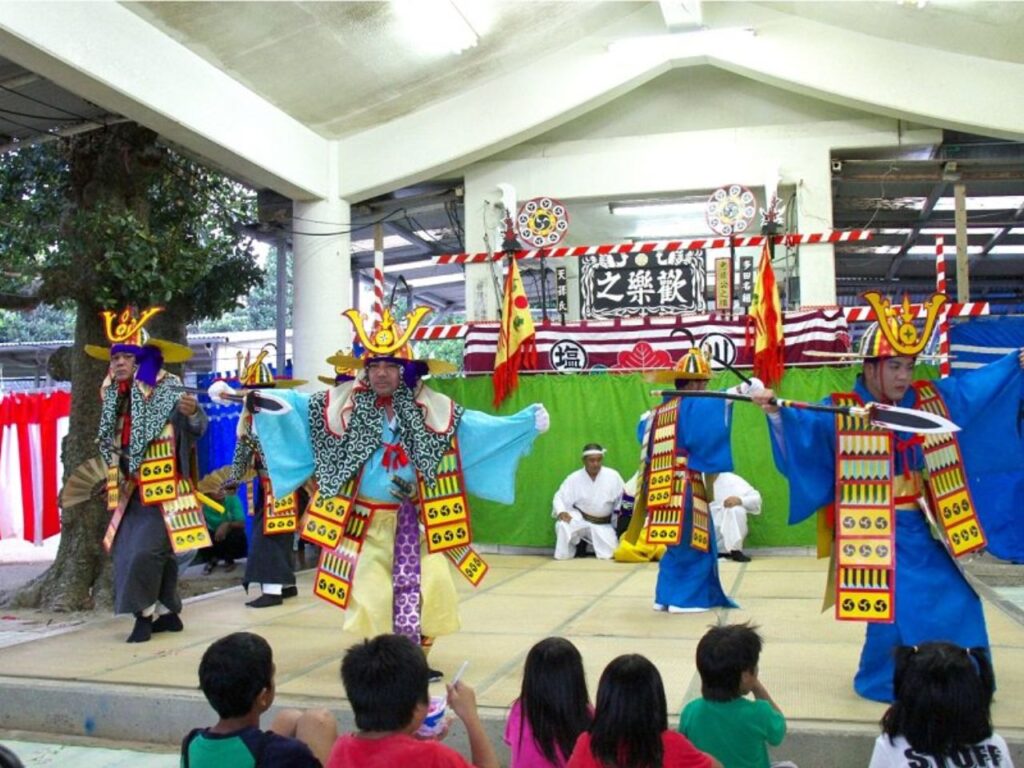
Tarama’s harvest festival is thought to have started as a dance of thanks after a period of heavy taxation, and today blends the island’s own tradition with kumiodori dance-drama brought over from the Okinawan mainland. The Nakasuji district performs pieces like Chūshin Nakasone Tumiyā Gumi, while the Shiokawa district performs others; kyogen and folk dance round out the program. You don’t need to understand the Tarama dialect to enjoy the energy of it — it’s a nationally designated Important Intangible Folk Cultural Property and draws researchers as well as tourists.
📅 When: Most years, lunar 8th month, 8th–10th day
📍 Where: Tarama Island, Tarama Village
Hachigatsu Ashibi
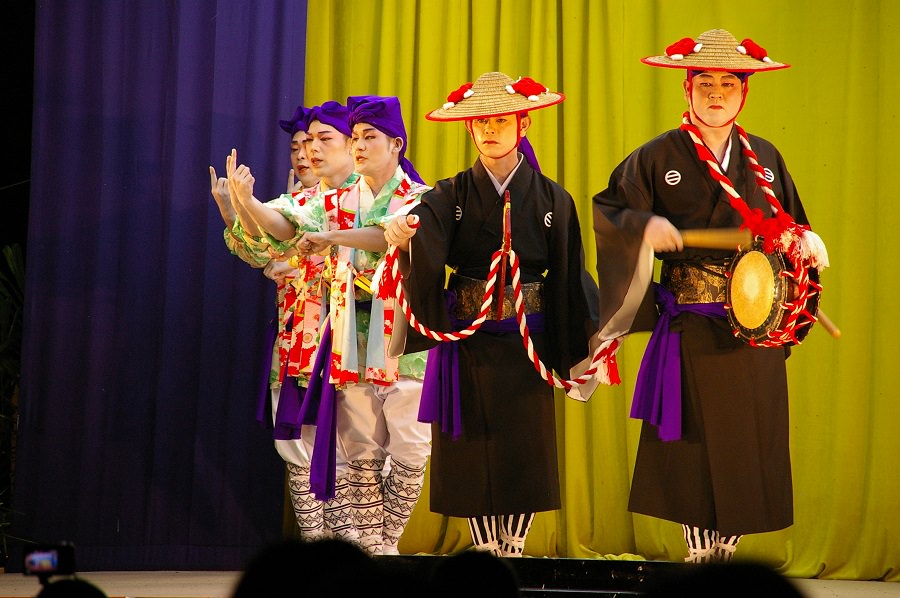
Held every other year in Ginoza, this harvest festival has run for more than 120 years and is considered a defining example of Okinawa’s “August ashibi” tradition. Rehearsals for the four performance categories — kumiodori, dance, drama, and stick-fighting — start in the lunar 7th month; on the day itself, a procession (Michijunee) carries flags, lion dancers, fan dancers and drummers from the local shrine to the main square, stopping three times along the way for stick-fighting displays. The program includes classical pieces such as Fuseyama Tekiuchi, Chūshin Migawari, Shiki Kudoki and Chōsenchō, plus Chondara performance. It was designated a national Intangible Folk Cultural Property in 2005.
📅 When: Biennial (odd years), around lunar 8th month, 15th day
📍 Where: Ginoza District, Ginoza Village
September — Eisa Season
Okinawa Zento Eisa Festival
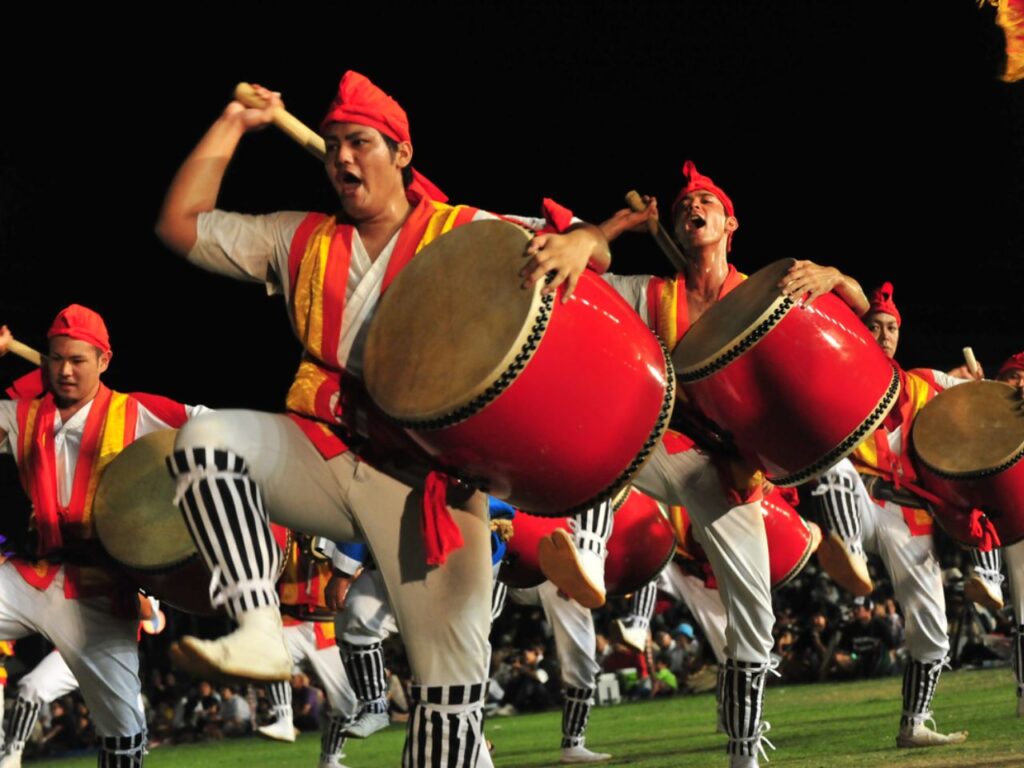
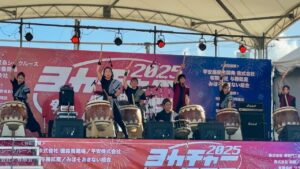
Eisa is the dance performed during Bon to send off ancestral spirits — young performers beat hand drums and dance through their neighborhoods to chanting and song, with costumes and choreography that vary district by district. The islandwide festival, held the first weekend after Bon ends, draws crowds from across Okinawa and beyond; at night, lit performances and drumming take on a different, almost otherworldly atmosphere. Okinawan soba and taco rice stalls line the grounds throughout.
📅 When: First weekend after Bon ends. In 2025: Day 1 (street parade) Sept 12, Day 2 (Okinawa City youth festival) Sept 13, Day 3 (main festival) Sept 14
📍 Where: Day 1 street parade around Goya Crossroads; final day at Koza Undo Koen Athletic Stadium, Okinawa City
Irabu Tougani Festival
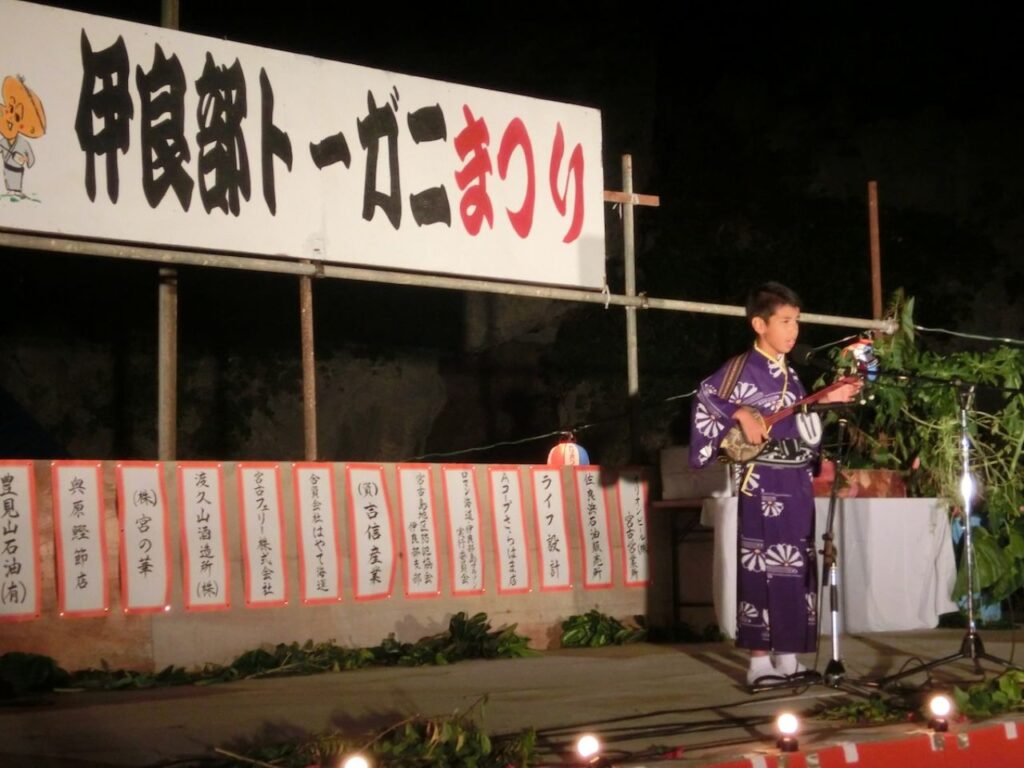
Since 2000, Irabu Island (part of the Miyako island group) has held this annual song festival to keep alive Irabu Tougani, a lyrical folk song about love between a man and a woman, said to be named for the singer who first performed it. Competitors are judged across three categories: Tougani itself, the celebratory song Tougani Ayagu, and Shima Tougani, sung a cappella without sanshin. The evening opens with a children’s choir — a nice reminder that the tradition is actively being passed to the next generation.
📅 When: Roughly September–November; the date changes year to year
📍 Where: Sarahama Sports Center, Irabu, Miyakojima
Late September – October — Autumn Rituals
All-Island Lion Dance Festival
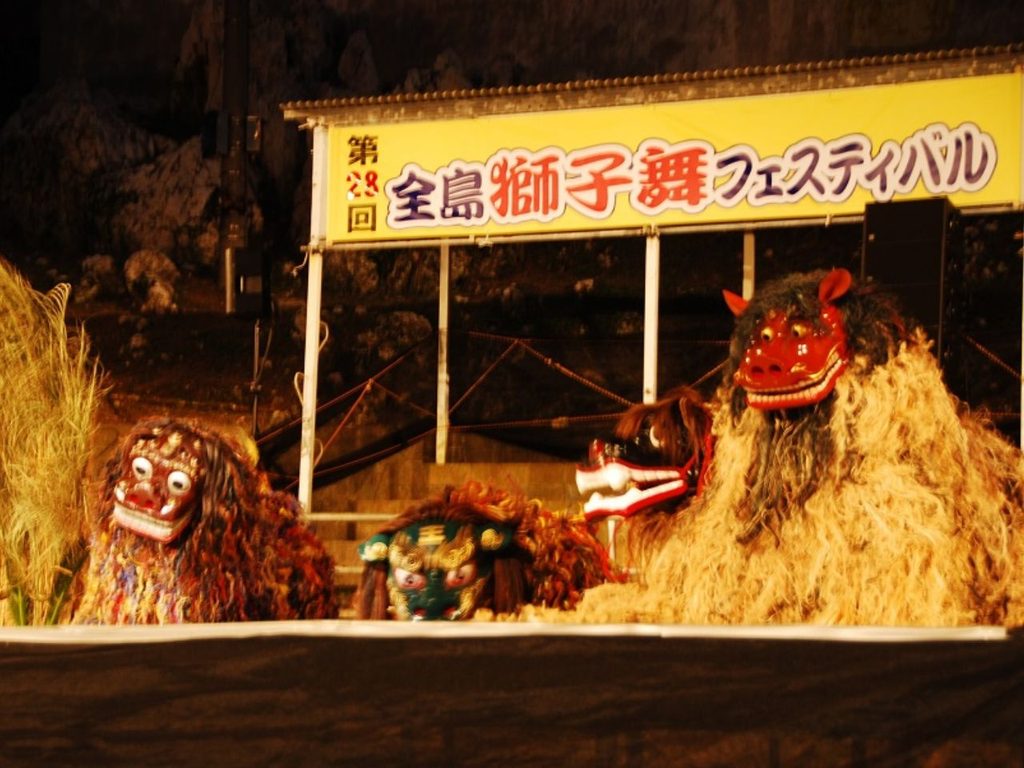
Lion dance (shishimai) troupes from all over Okinawa gather in Uruma City — an area with particularly deep ties to the tradition — to drive off evil spirits and pray for a good harvest. Each troupe’s lion has its own distinct look and character, and the performances are loud, physical, and genuinely impressive up close; audience clapping and chanting are part of the show.
📅 When: Annually, the Sunday closest to lunar 9th month, 15th day (moves indoors to the Uruma Civic Arts Theater in bad weather)
📍 Where: Aguni Bullfighting Arena, Aguni 1076, Uruma City
Naha Great Tug-of-War
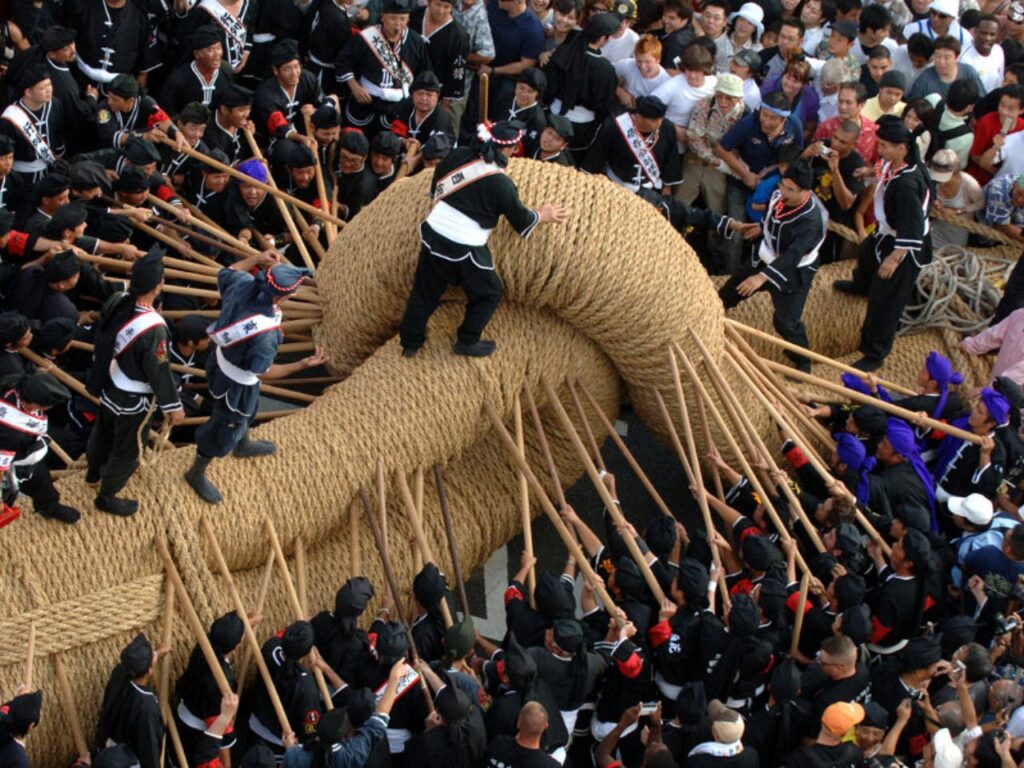
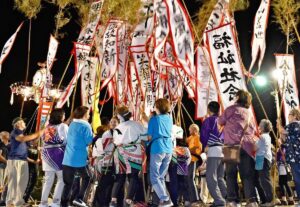
Okinawa’s largest traditional event, with more than 400 years of history: a 200-meter, 40-ton straw rope pulled by upward of 15,000 people, officially Guinness-certified as the largest tug-of-war in the world. Flag processions and Eisa performances usually bookend the main event, turning the whole street into a festival for the day, with Naha’s Kokusai-dori shopping street right next door for food and souvenirs afterward.
📅 When: Annually, around early October
📍 Where: Kumoji Crossroads, National Route 58, Naha
🔗 Official site: https://www.naha-otsunahiki.org/
Paantu, Shimajiri district
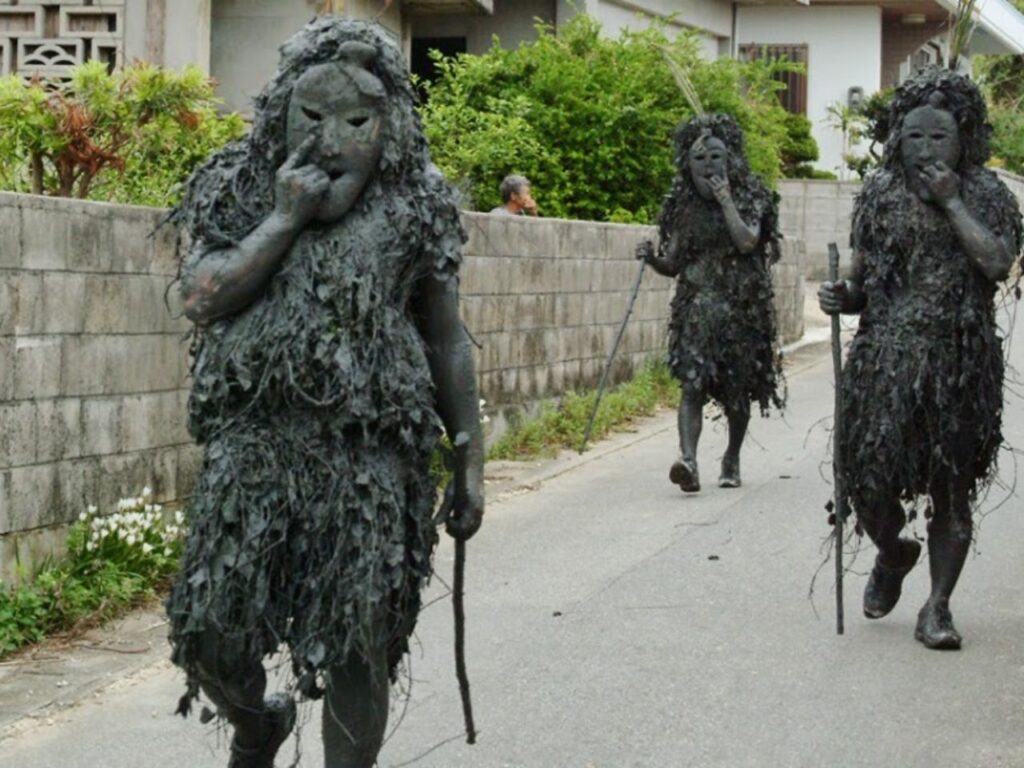
Paantu means something like “monster” in local dialect, and the visiting deity lives up to it: three figures, coated head to toe in mud and wrapped in vines, appear over two nights to smear mud on new houses and small children as a blessing against illness. It’s genuinely startling to witness — equal parts unnerving and hilarious — and was added to UNESCO’s Intangible Cultural Heritage list in 2018 (it was designated a national Important Intangible Folk Cultural Property back in 1993). The exact date is kept secret until just before the festival.
📅 When: Two nights in early lunar 9th month, roughly 5–8pm (announced only shortly beforehand)
📍 Where: Shimajiri district, Hirara, Miyakojima
Iriomote Island Shichi Festival
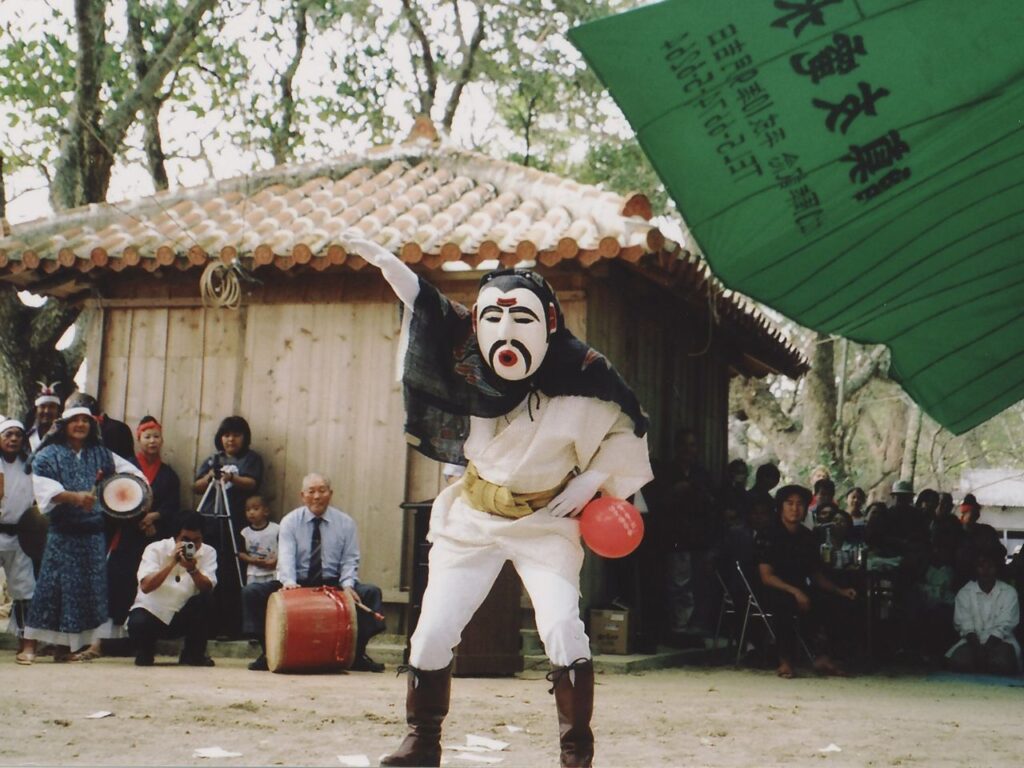
A roughly 500-year-old ritual welcoming good fortune from across the sea, held over three consecutive days starting on the day of tsuchinoto-i around the lunar 10th month, in the Sonai and Hoshidate districts. Day two, Yuukui, is the main event: dedication performances featuring the benevolent masked deity Miruku-sama, stick-fighting, lion dance and kyogen, plus a Haaree boat race rowed in from offshore. In Hoshidate, look for the “Ohoho” performers, who dance while shouting and waving bundles of cash. It’s a nationally designated Important Intangible Folk Cultural Property.
📅 When: Three consecutive days around the lunar 10th month
📍 Where: Sonai Public Hall / Maetomari Beach and Hoshidate Public Hall / Maenohama, Iriomote Island, Taketomi Town
Paantu, Uenonohara district
A second, separate Paantu tradition: young boys wear masks and, accompanied by drums and conch-shell horns, lead women dressed in kurotsugu palm and vine through the village in a livelier, more celebratory version of the ritual.
📅 When: The last “Ox” day of the lunar 12th month
📍 Where: Uenonohara district, Miyakojima
Early November — Dance in a Circle
Kuicha Festival
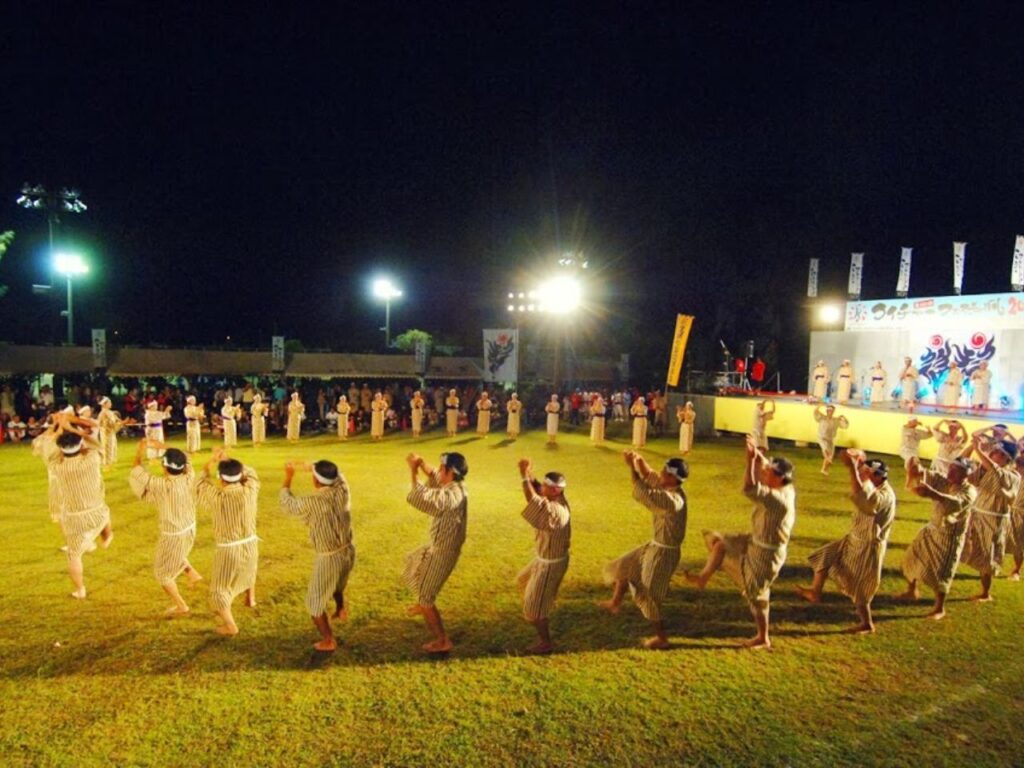
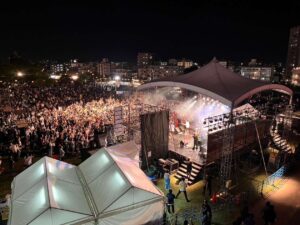
Kuicha is a Miyako Island dance performed in a circle to call-and-response chanting (“Ninoyoisassa”) — no instruments, just voice and rhythm. It began as a prayer for rain and a good harvest and has since grown into a festival dance, now performed with added instrumentation and costume alongside the older style. The annual festival features distinct routines from different districts and groups, along with other Miyako folk performing arts, and usually invites the audience to join the circle themselves.
📅 When: Annually, early November (2024 was held November 3)
📍 Where: JTA Dome Miyakojima, Hirara, Miyakojima
🔗 Official site: https://kuifes.com/
Because so many of these dates are set by the old lunar calendar, they shift from year to year — always worth double-checking the official site or local tourism association before building a trip around one. But timed right, a visit built around even one of these festivals gets you a version of Okinawa that has nothing to do with beaches or resorts: centuries of island history, still being lived out in public, block by block.