You think you know Okinawa because you’ve had taco rice and Blue Seal ice cream? That’s adorable.
Let’s talk about the food that doesn’t show up in glossy travel brochures. The stuff locals grow up on. The dishes that quietly whisper, “You’re either family… or you’re not.”
Here’s the real menu.
Juushii (Okinawan Seasoned Mixed Rice)
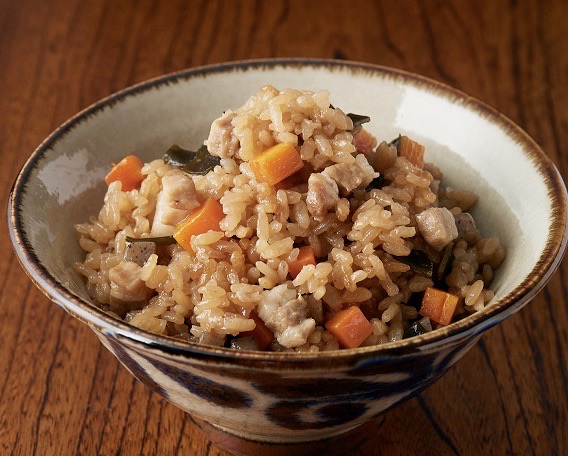


Main ingredients: Rice, pork, carrot, hijiki seaweed, shiitake mushrooms, pork broth
How it’s made:
Rice is cooked together with pork broth, vegetables, and soy-based seasoning. Everything absorbs flavor at once — no separate cooking, no drama. Just one pot and patience.
Origin story (urban legend version):
Old-timers say Juushii was born during a time when meat was scarce and dignity was not. Families would gather scraps of pork left from New Year celebrations and stretch it into rice so no one at the table went hungry. There’s even a story that during the Ryukyu Kingdom era, palace cooks secretly shared richer Juushii recipes with villagers after feasts, passing down flavor as a quiet rebellion. Whether true or not, every grain feels like it carries a memory of survival and generosity.
Where you can find it:
Local bentos, family gatherings, small neighborhood eateries across Naha, Itoman, and Ginowan.
Somen Champuru (Stir-Fried Somen Noodles)

Main ingredients: Somen noodles, Spam or pork, egg, chives, bean sprouts
How it’s made:
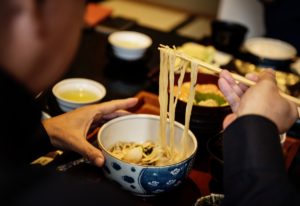
Boiled somen is quickly stir-fried with oil, meat, vegetables, and egg. Timing is everything — too long and it turns into mush.
Origin story:
Legend says this dish was born out of boredom and necessity. After the war, American canned meat flooded Okinawa. One grandmother, tired of eating plain noodles, threw everything into a pan — somen, Spam, whatever greens were growing outside — and declared, “If we mix it, it becomes ours.” That’s the spirit of champuru: taking what history hands you and making it taste like home.
Where you can find it:
Home kitchens island-wide, local diners in Okinawa City, and small izakayas in Chatan.
Don’t Miss This Seasonal Event in Okinawa Now
Fried Gurukun (Deep-Fried Banana Fish)


Main ingredients: Gurukun (local reef fish), salt, light batter
How it’s made:
The fish is cleaned, lightly seasoned, and deep-fried whole until crispy enough to eat nearly everything — head included.
Origin story:
Fishermen say Gurukun chose Okinawa long before Okinawa chose it. There’s a tale that during a violent storm, these fish swam unusually close to shore, feeding entire villages when fishing boats couldn’t leave the harbor. Since then, locals fry it whole out of respect — wasting nothing, honoring the sea that saved them.
Where you can find it:
Beachside restaurants in Onna, local izakayas in Nago, and seafood spots throughout the islands.
Shima Rakkyo (Okinawan Island Shallots)
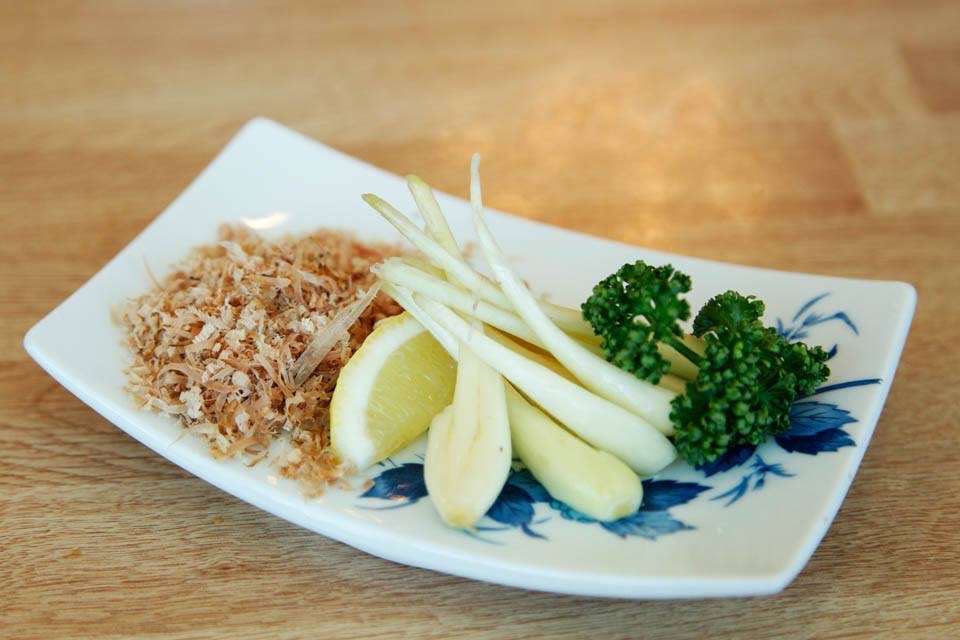
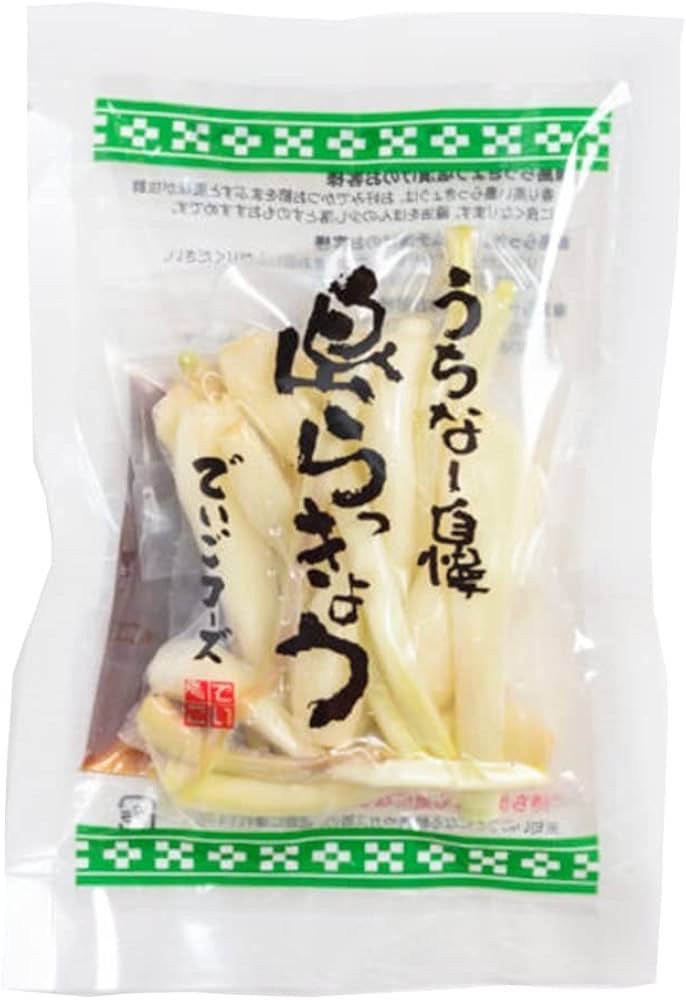
Main ingredients: Local shallots, salt, bonito flakes
How it’s made:
Usually lightly pickled or salted and served raw for maximum crunch and bite.
Origin story:
Some say Shima Rakkyo grows strongest in soil that’s been through typhoons. Farmers joke that the harsher the wind, the sharper the flavor. There’s an old belief that eating it keeps your spirit tough and your words sharper — which might explain why every family has that one uncle who eats a plate of it before speaking his mind.
Where you can find it:
Izakayas across central Okinawa and markets in Naha.
Jimami Tofu (Peanut Tofu)

Main ingredients: Peanuts, sweet potato starch, water
How it’s made:
Ground peanuts are strained into milk, thickened with starch, and cooled into a soft, pudding-like block.
Origin story:
Back when the Ryukyu Kingdom traded with China and Southeast Asia, peanuts arrived like quiet diplomats. The story goes that a royal cook, trying to impress foreign guests, created a “tofu” without soybeans. It was so silky that it became a court favorite — and later a humble village treat. Some whisper that the smooth texture symbolizes peace negotiations that once kept Okinawa independent for centuries.
Where you can find it:
Traditional restaurants in Shuri, specialty tofu shops, and local supermarkets.
Join a Guided Tour in Okinawa
Ninjin Shirishiri (Carrot Stir-Fry)
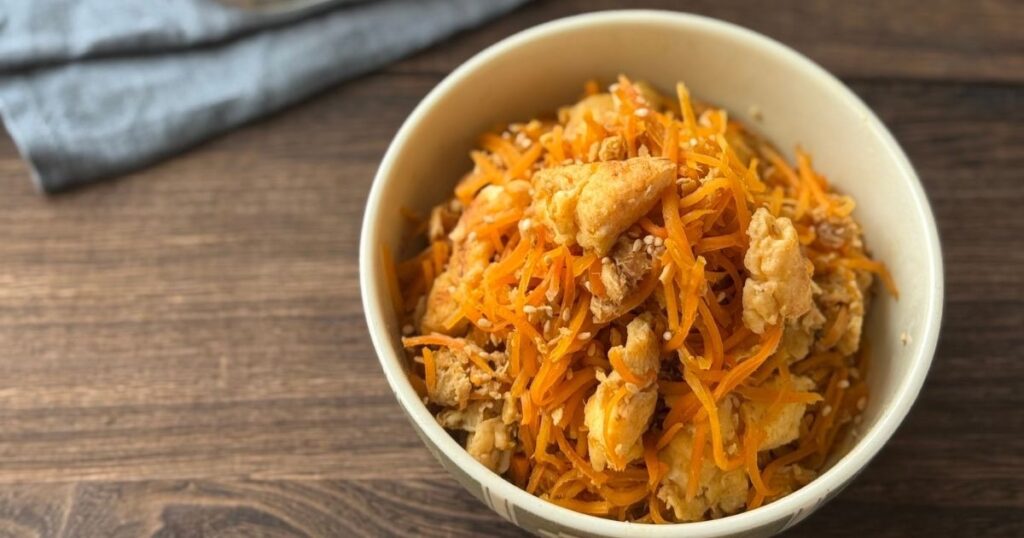
Main ingredients: Julienned carrots, egg, tuna or pork, soy sauce
How it’s made:
Thinly shredded carrots are stir-fried, combined with protein, and finished with scrambled egg.
Origin story:
There’s a rumor that this dish became popular because one grandmother refused to let her grandchildren waste vegetables. She shredded carrots so thin they couldn’t pick them out. The word “shirishiri” mimics the sound of shredding — shh-shh-shh — like a secret being grated into dinner. Today, it’s the stealth health food of Okinawa.
Where you can find it:
School lunches, home kitchens, and local diners throughout the island.
Squid Ink Soup (Ika Sumi Jiru)


Main ingredients: Squid, squid ink, pork broth, ginger
How it’s made:
Squid and ink are simmered in pork broth with ginger until the soup turns jet black.
Origin story:
It’s said that this soup was once reserved for women recovering after childbirth, believed to restore strength. Fishermen claim the darker the broth, the stronger the blessing. Kids used to dare each other to smile after eating it, flashing blackened teeth like pirates of the East China Sea.
Where you can find it:
Traditional eateries in Naha and older family-run restaurants in rural Okinawa.
Hirayachi (Okinawan Savory Pancake)

Main ingredients: Flour, egg, chives, sometimes canned tuna
How it’s made:
A thin batter is mixed and pan-fried until lightly crispy.
Origin story:
During stormy typhoon days when families couldn’t leave the house, mothers would mix whatever was available into a quick batter. Kids would watch the rain slam against windows while the smell filled the room. Some say Hirayachi tastes best when the wind is howling outside.
Where you can find it:
Home kitchens and festival stalls across the island.
Muuchi (Ginger-Leaf Mochi)
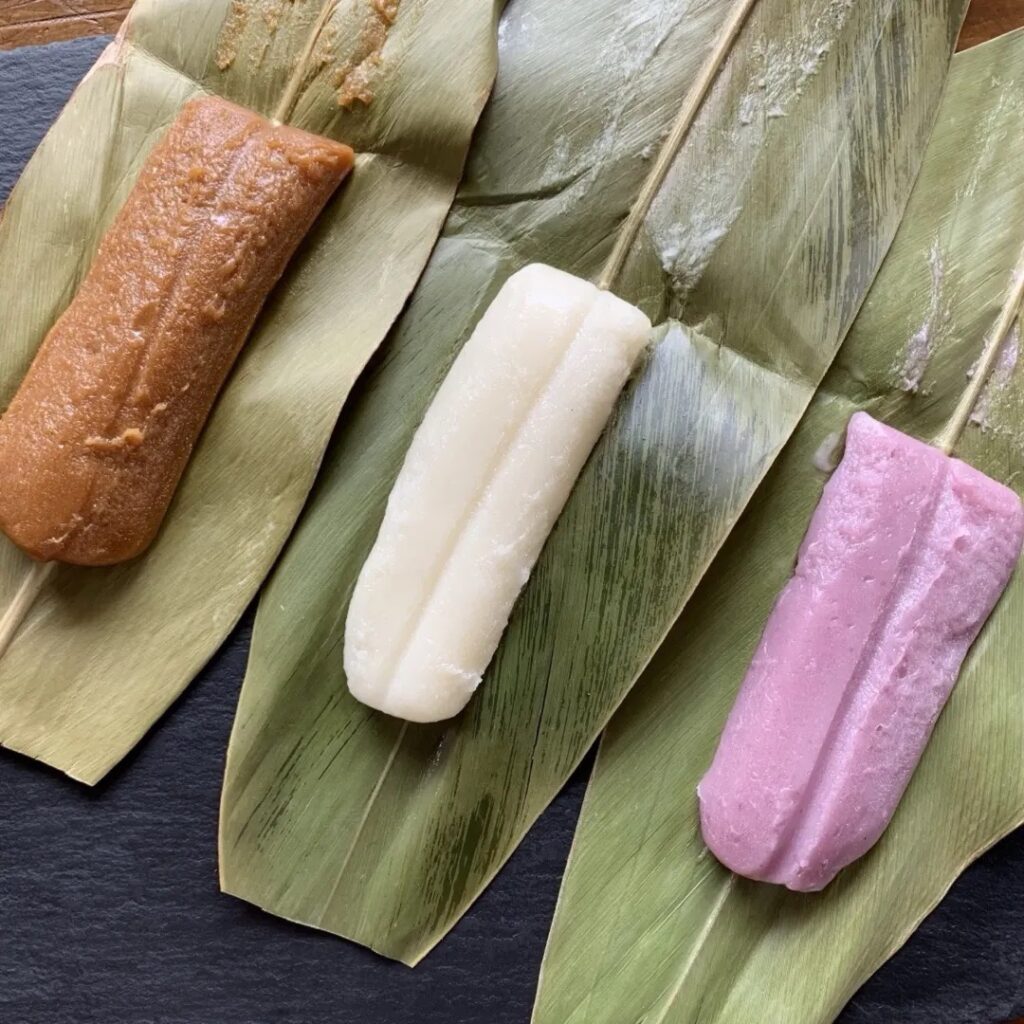
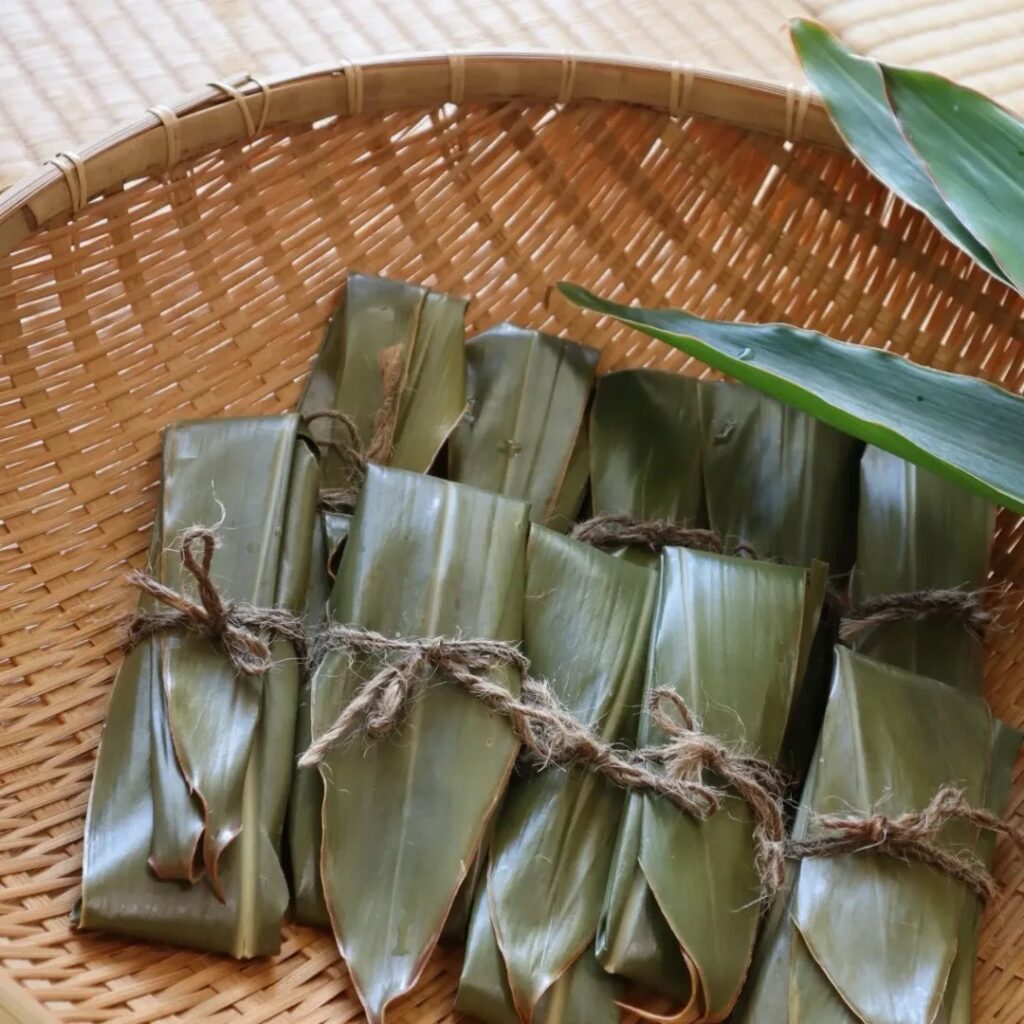
Main ingredients: Mochi rice flour, sugar, shell ginger leaves
How it’s made:
Sweet dough is wrapped in fragrant shell ginger leaves and steamed.
Origin story:
The legend says a wicked spirit once terrorized a village until a clever girl tricked it with sweet rice cakes wrapped in bitter leaves. The spirit fled, and Muuchi became a symbol of protection. To this day, families make it during the lunar Muuchii festival to protect children from illness.
Where you can find it:
Homes across Okinawa during Muuchii season (around January), and some local sweet shops.
Chinbin (Brown Sugar Crepe)
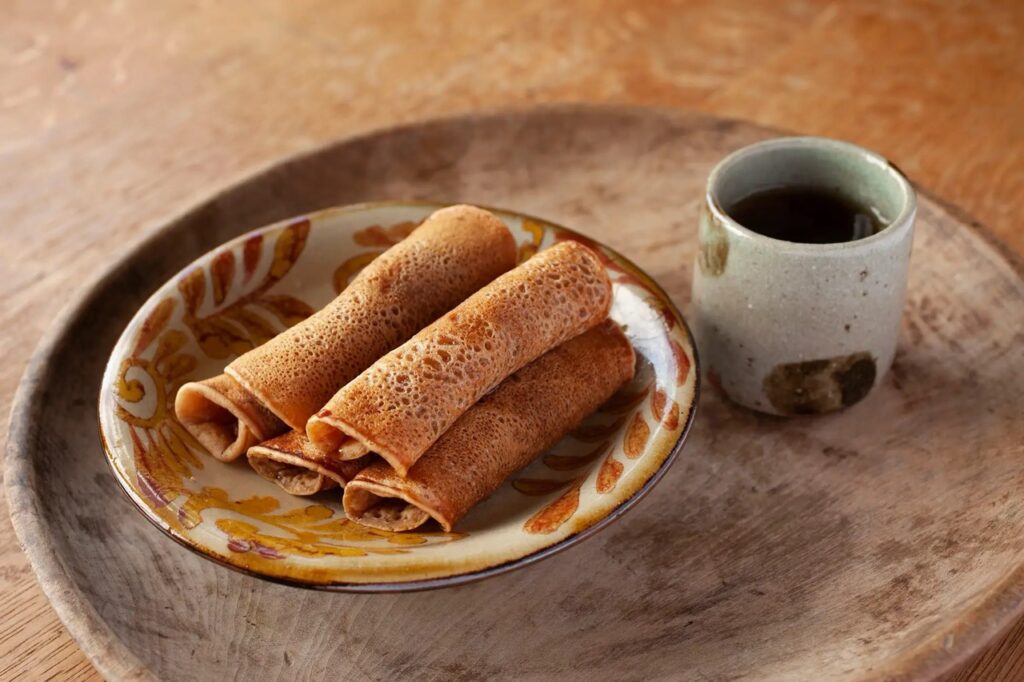
Main ingredients: Flour, eggs, Okinawan kokuto (brown sugar)
How it’s made:
Thin batter sweetened with rich brown sugar is cooked like a crepe and rolled up.
Origin story:
Before candy was common, brown sugar was the island’s treasure. There’s a story that children would trade chores for extra pieces of kokuto. Chinbin became the affordable luxury — sweet enough to make you forget the heat, simple enough to make every day feel like a small festival.
Where you can find it:
Festival stalls, small bakeries, and home kitchens.
Oki Social Official Gift Shop

Established in 2021 in the heart of Kadena Air Base, Oki Social Store serves the community and all who love Okinawa. Our Okinawa-inspired souvenir shop features art and gifts designed and created by talented local artists right here on the island.
Okinawa Zenzai (Shaved Ice with Sweet Beans)
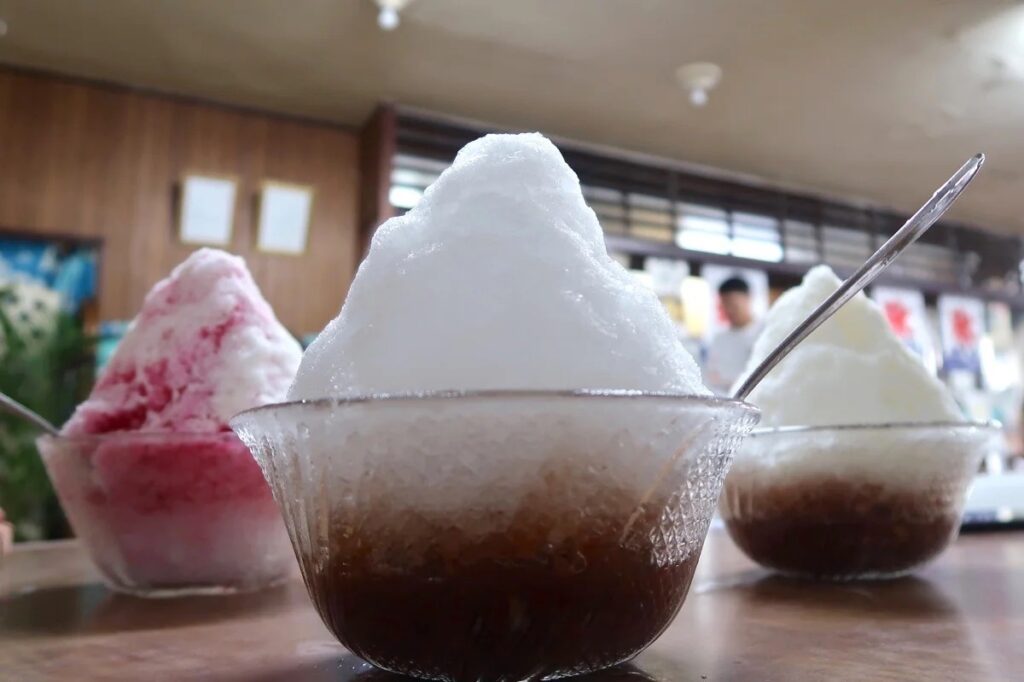
Main ingredients: Sweet red beans, shaved ice, condensed milk, mochi
How it’s made:
Sweet beans sit at the bottom, topped with a mountain of shaved ice and condensed milk.
Origin story:
Unlike mainland Japan’s warm zenzai, Okinawa flipped it cold. The legend says someone once left sweet beans out on a scorching day and dumped ice over them out of desperation. It worked. From then on, dessert had to survive humidity, salt air, and summer that feels personal.
Where you can find it:
Dessert shops in Naha, beach towns like Chatan, and local summer festivals.
Mozuku (Okinawan Seaweed)

Main ingredients: Fresh mozuku seaweed, rice vinegar, soy sauce, sometimes cucumber or ginger
How it’s made:
Mozuku is usually rinsed, lightly dressed in a tangy vinegar sauce, and served chilled. Some versions are added to tempura batter or soups, but the classic way keeps it simple and slippery.
Origin story:
There’s a story that mozuku was once considered “food for the sea spirits.” Fishermen noticed that the richest harvests came from reefs that villagers treated with respect. Over time, mozuku farming became a quiet backbone of coastal communities, especially in places like Katsuren and Onna. Locals joke that eating mozuku is the secret to Okinawan longevity — maybe it’s the minerals, maybe it’s the ocean itself working its way into your bloodstream.
Where you can find it:
Coastal restaurants, local supermarkets, roadside seafood markets, and especially in areas like Onna Village, known for mozuku farming.
The Real Secret
The secret isn’t hidden ingredients.
It’s that these dishes were never meant to impress you.
They were meant to feed someone you love.
And that’s why locals don’t advertise them.
They just make them — and wait to see who notices.
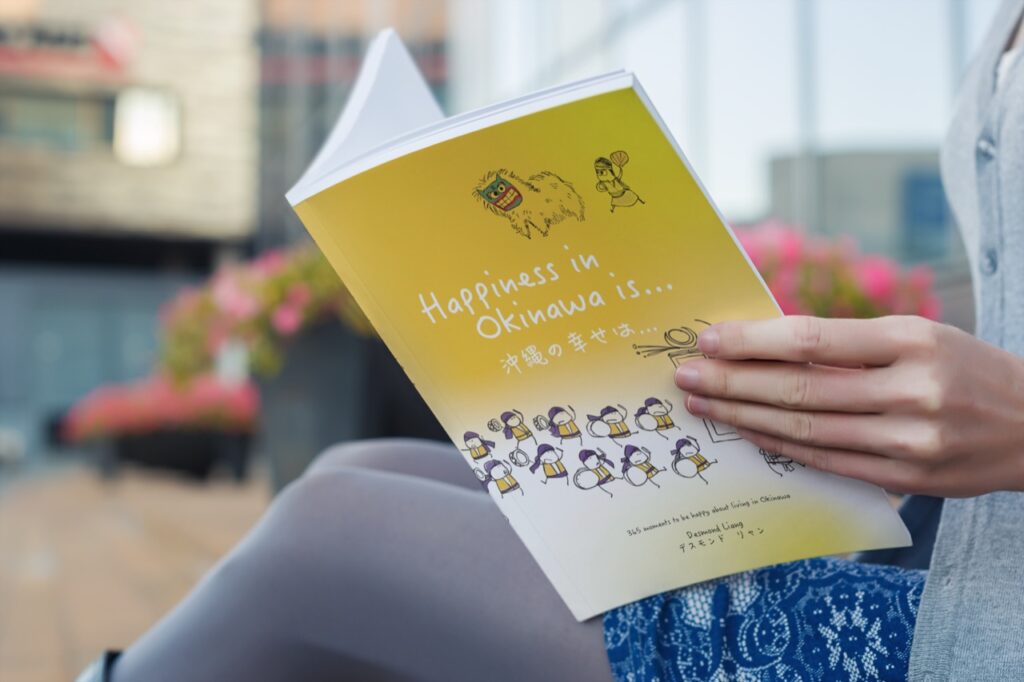
Happiness in Okinawa Is…
A heart warming book that illustrates 365 happy moments about living on Okinawa. Now on sale on Amazon and in store.
Join a Guided Tour in Okinawa
⚠️Disclaimer
The information provided in this website is for general informational purposes only. While we strive to provide accurate and up-to-date information, we cannot guarantee its completeness, reliability, or complete accuracy. Travel information, including attractions, accommodations, and transportation, may change over time. Readers are advised to independently verify details, check travel advisories, and make necessary reservations. We do not assume any liability for loss or inconvenience caused by relying on the information. Remember, travel experiences are subjective and vary based on personal preferences. Tailor your travel plans to your individual needs and interests. Happy travels!